-
Phone: +86 755 23052717

What is the difference between LED, LCD and OLED display?
LED display
LED (Light Emitting Diode) display screen is a display device composed of an array of light-emitting diodes. According to application scenarios, LED displays can be divided into the following categories:
Small-pitch LED display: The pixel pitch is small and suitable for indoor high-precision display.
Large-pitch LED display: Large pixel spacing, usually used in outdoor advertising, sports venues and other occasions that require long-distance viewing.
advantage:
High brightness: suitable for outdoor strong light environments.
Long life: LED lamp beads have long life and low maintenance costs.
Low power consumption: Compared with LCD, LED display screen is more energy-saving.
Large size: can be spliced to form a super large display area.
shortcoming:
Limited resolution: Especially for large-spacing LEDs, the viewing effect at close range is not good.
High cost: Especially high-precision small-pitch LED screens are more expensive.
LCD display
LCD (Liquid Crystal Display) displays use liquid crystal molecules to change their arrangement under the action of an electric field to adjust light, and display images through backlight illumination. LCD displays are widely used in televisions, monitors, mobile phones and other equipment.
advantage:
High resolution: suitable for high-precision display.
Color accuracy: Color performance is more realistic.
Lower cost: The production process is mature and the cost is relatively low.
Wide application: Suitable for various electronic devices.
shortcoming:
Limited viewing angles: Viewing angles are small, and colors and contrast degrade when viewed off-center.
Slow response time: not suitable for displaying rapidly changing images.
Low contrast: black is not pure enough, and the display effect is not as good as OLED.
OLED display
The OLED (Organic Light Emitting Diode) display uses organic light-emitting materials to emit light under the action of electric current without the need for a backlight. OLED technology has been widely used in high-end smartphones, TVs and other equipment in recent years.
advantage:
High Contrast: Each pixel emits light individually, with excellent black performance and infinite contrast.
Wide viewing angle: The viewing effect is consistent from all angles.
Fast response time: suitable for displaying rapidly changing images.
Flexible display: can be made into a curved or foldable screen.
shortcoming:
Shorter lifespan: Organic materials age easily, and blue pixels age faster.
High cost: The production process is complex and the cost is high.
Screen burn-in problem: Displaying static images for a long time may cause screen burn-in.
Summarize
LED, LCD and OLED displays each have their own unique technical characteristics and application scenarios. Which display technology to choose depends mainly on the specific usage requirements and application environment:
LED display: suitable for outdoor advertising and sports venues that require high brightness and large size.
LCD display: suitable for everyday electronic devices that require high resolution and accurate color, such as TVs, monitors and mobile phones.
OLED display: suitable for high-end devices that pursue high contrast, wide viewing angles and fast response times, such as high-end smartphones and TVs.
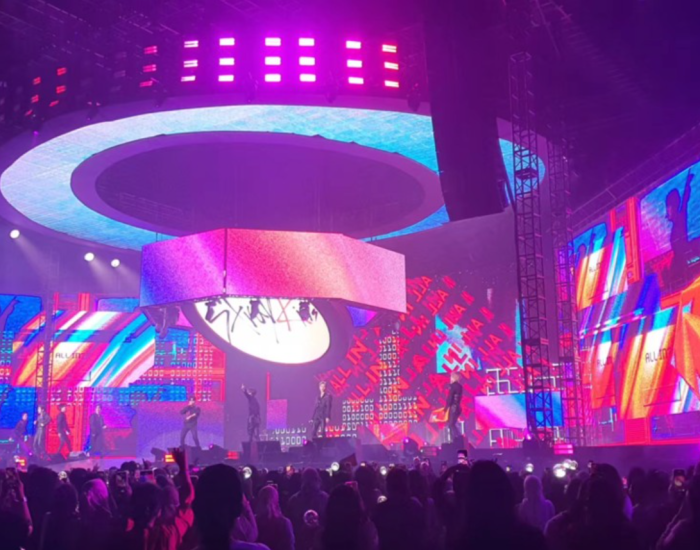
WORLD TOUR
11 Jun.
Rental
In 2024, we provided QUARTZ QZI3.9 LED screens for a world tour stop in Jakarta, Indonesia, contributing to the live entertainment experience. These screens, with a 3.9mm pixel pitch, supported the visual elements…
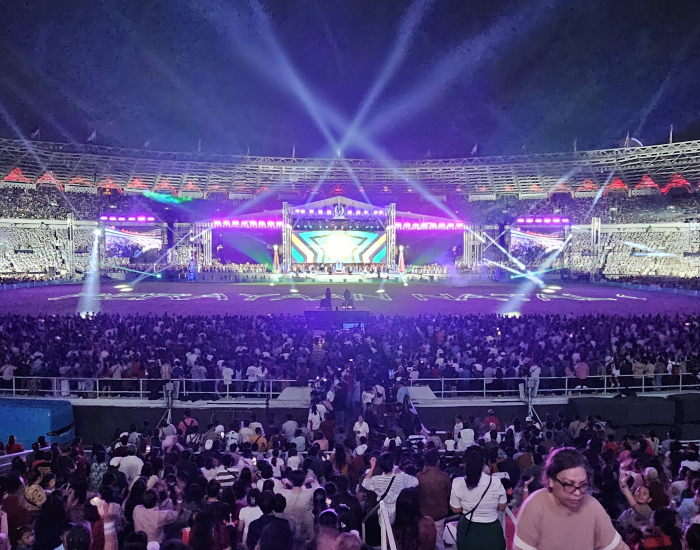
STAGE
11 Jun.
Rental
In 2024, our QUARTZ QZO3.9 LED screens were used for an outdoor stage in Jakarta, Indonesia. These rental LED screens, with a 3.9mm pixel pitch, contributed to the event’s visual setup, working well alongside…
HISTORY OF
VISUAL WORLD
The team members of Visual World have been working in the LED display industry for more than ten years, and have a deep understanding of industry trends and products. The rich industry knowledge allows us to better provide customers with customized products and services.
Products
Market
Support
About
© 2025 Copyright VISUAL WORLD