-
Phone: +86 755 23052717

What are the differences between a COB LED display and a SMD LED display?
For customers who want to buy LED screens, understanding the difference between COB (chip on board) and SMD (surface mount device) LED displays will help you make the right choice. The main differences are categorized below:
1. Technology
COB: It is a method of mounting multiple light-emitting diode chips directly on a single substrate. Such an arrangement does not require a separate LED package, thus enabling a compact design.
SMD: Refers to an LED chip packaged on a printed board (PCB). Each LED is packaged in a small standard package and then soldered to a printed circuit board.
2. Design and architecture:
COB: COB display has a simpler design, fewer components, compact distribution of LED chips, relatively uniform display surface shape, and better overall brightness and color consistency.
SMD: SMD displays have only one LED package, so their design is more complicated. Such a design may cause slight changes in the color and brightness of the display, but advances in technology have greatly alleviated this problem.
3.Brightness and color consistency:
COB: COB display can provide better brightness and color consistency because the LED chips are very close together. This makes the illumination of the entire display screen more uniform.
SMD: Although the SMD process improves the stability of the product, there are still some differences in brightness and color because the LEDs are packaged separately.
4. Perspective
COB: COB displays generally have a larger viewing range because the LEDs are closely arranged in a row, which can reduce color and brightness distortion.
SMD: The viewing angle of SMD displays will be slightly narrower and the appearance will be affected by the specific LED structure on the PCB.
5. Maintenance and repair capabilities:
COB: COB displays are more difficult to maintain because all the light-emitting diodes are placed on the same substrate. If one LED fails, the entire substrate must be replaced.
SMD: SMD displays tend to be more modular, making it easier to identify and replace individual failed LEDs. This simplifies maintenance and reduces maintenance costs.
6. Cost.
COB: COB monitors are more expensive in production and initial purchase, especially for small screens, because the advantages of SMD are not obvious.
SMD: The initial cost of an SMD monitor may be lower, but the advantages of modularity and the potential savings on maintenance and upkeep will more than make up for it in the long run.
7. Anti-collision:
COB: COB is an integrated unit that has few elements, making it more resistant to damage from physical collisions. Because separate LED packaging is not required, the risk of components shattering when a collision occurs is reduced.
SMD: Compared with COB, SMD is more susceptible to damage from collision and impact because it uses independent LED components. However, as protection technology develops and filter design improves, its durability has also improved.
In short, COB LED screens have certain anti-collision, moisture-proof, and scratch-proof properties. The specific impact, moisture, and scratch resistance depends on the protective coating used, the quality of the materials used, and the overall display design. When choosing COB and SMD displays, you must comprehensively consider the purpose of use and the surrounding environmental conditions.
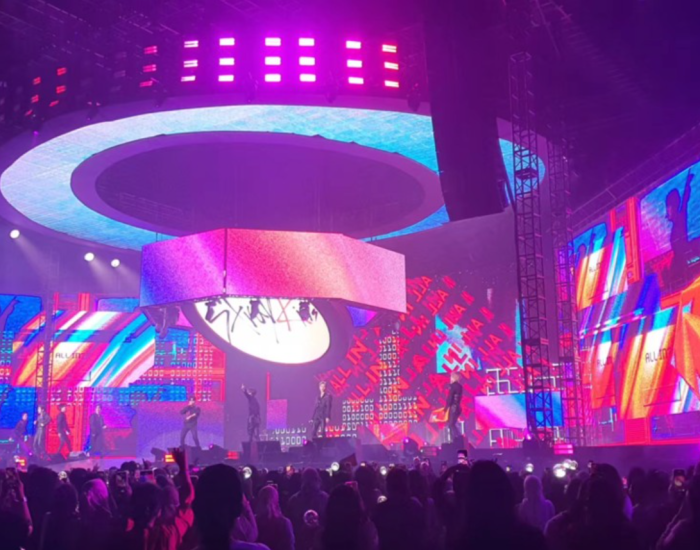
WORLD TOUR
11 Jun.
Rental
In 2024, we provided QUARTZ QZI3.9 LED screens for a world tour stop in Jakarta, Indonesia, contributing to the live entertainment experience. These screens, with a 3.9mm pixel pitch, supported the visual elements…
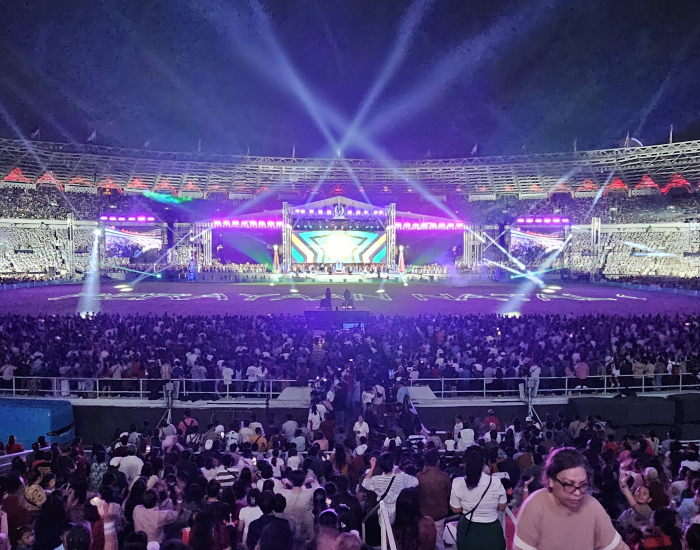
STAGE
11 Jun.
Rental
In 2024, our QUARTZ QZO3.9 LED screens were used for an outdoor stage in Jakarta, Indonesia. These rental LED screens, with a 3.9mm pixel pitch, contributed to the event’s visual setup, working well alongside…
HISTORY OF
VISUAL WORLD
The team members of Visual World have been working in the LED display industry for more than ten years, and have a deep understanding of industry trends and products. The rich industry knowledge allows us to better provide customers with customized products and services.
Products
Market
Support
About
© 2025 Copyright VISUAL WORLD